US shopping and hosting guide · Sources checked November 2, 2026
Looking for food that is both vegan and kosher in the United States? Check two things separately: whether the food meets your vegan requirements, and whether its kosher status meets the standards of the person eating it. A vegan label does not establish kosher status, and a kosher symbol does not establish vegan status.
At Vegan Finds, our family in Kiryat Tivon, Israel, explores vegan products and food ideas. This guide brings that perspective to US supermarket shopping, shared meals and Israeli-inspired cooking. It explains labels and useful questions; it does not certify products or kitchens.
Vegan and kosher describe different requirements
Vegan food excludes animal-derived ingredients, including meat, fish, dairy, eggs and honey. Kosher food follows Jewish dietary laws, which also address ingredients, equipment and preparation. A plant-based formulation alone does not resolve all of those questions. OU Kosher explains why vegan products still need a separate kosher assessment.
Pareve, also spelled parve, is a kosher category for foods classified as neither meat nor dairy. Fish and eggs can be pareve, so it is not a synonym for vegan. The practical approach is to verify both requirements instead of using one label as a shortcut for the other.
A quick guide to labels on US packages
| What you see | What it tells you | What still needs checking |
|---|---|---|
| Vegan or certified vegan | A statement about animal-derived ingredients; a certification follows its own published standard. | Kosher status is a separate question. |
| Kosher certification and pareve designation | The product has a kosher status classified as neither meat nor dairy. | It may still contain fish, eggs or other ingredients unsuitable for vegans. |
| OU-D or OK D | A dairy-related kosher designation. OU explains that its D can cover dairy ingredients or dairy equipment. | Do not decide vegan status from this letter alone. Check the formulation and the certifier’s explanation. |
| A DE designation | Dairy equipment, as defined by the certifying agency. | This is not the same as saying milk is an ingredient. Check the agency’s guidance and the product’s vegan status separately. |
| OU-P or OK P | A Passover designation; P does not mean pareve in these marks. | Vegan suitability and any other accompanying kosher designations still matter. |
These are examples from OU’s symbol guide and OK’s explanation of its marks. Read each agency’s own definitions rather than assuming every certifier uses identical lettering.
How to shop for packaged kosher vegan food
- Start with the exact item. Note the product name, flavor and package size. Check the current package rather than relying on an old photograph or a brand’s general reputation.
- Verify vegan suitability. Read the ingredient list and, where available, the vegan certification or manufacturer’s explanation. A kosher symbol alone does not settle this.
- Check the kosher mark. Identify the certifying agency and any accompanying letters. If you are buying for someone else, ask which certifications they accept.
- Resolve uncertainty before purchasing. Use the certifier’s product information or contact the manufacturer or agency about that exact item. Keep the packaging for a guest to inspect.
Certification can be product-specific. OK’s labeling guidance requires the product name to match the certificate and distinguishes a certified product from a claim about an entire brand. One certified flavor does not establish the status of every product next to it on the shelf.
Foods to explore: an Israeli-inspired shopping list
You do not need to build every meal around a meat substitute. Here are categories to explore in a US grocery store or kosher market. They are meal ideas, not a list of certified products.
| Category | Ideas for the table | Useful checks |
|---|---|---|
| Chickpeas, lentils and beans | A hummus platter, lentil soup or chickpea stew. | For prepared versions, check ingredients and kosher status; toppings and sauces also count. |
| Tahini and other spreads | Lemon-tahini dressing, a dip or a sandwich spread. | Check the particular jar and flavor. A simple product name is not a certification. |
| Vegetables and fresh herbs | Roasted cauliflower, tomato-cucumber salad or grilled vegetables. | Follow appropriate produce checking and preparation guidance for the intended diners. |
| Bread and baked goods | Pita, flatbread or an explicitly vegan challah. | Some recipes contain eggs, milk or honey. Check the actual item and its kosher status. |
| Plant-based alternatives | Tofu, a dairy-free spread or a meat-style product. | Verify vegan suitability and kosher certification independently; neither follows automatically from the category. |
Not every basic food requires a printed kosher symbol. The cRc publishes a list of certain simple foods that do not require certification, with conditions and exclusions, plus a produce checking guide. Use the entry for the specific food; the basic-food list does not apply to Passover and includes special considerations for foods from Israel.
Hosting a kosher vegan meal
Ask about requirements before planning the menu. A useful message is: “I’d like to serve a vegan meal that works for you. Which certifications and preparation arrangements should I follow?” This lets your guest explain what matters to them without having to assess a finished meal at the door.
Agree on ingredients, cookware and serving arrangements first. If a home-prepared meal will not meet their requirements, ask whether sealed certified items or food from an acceptable supervised kitchen would work. Let the guest help choose the practical solution.
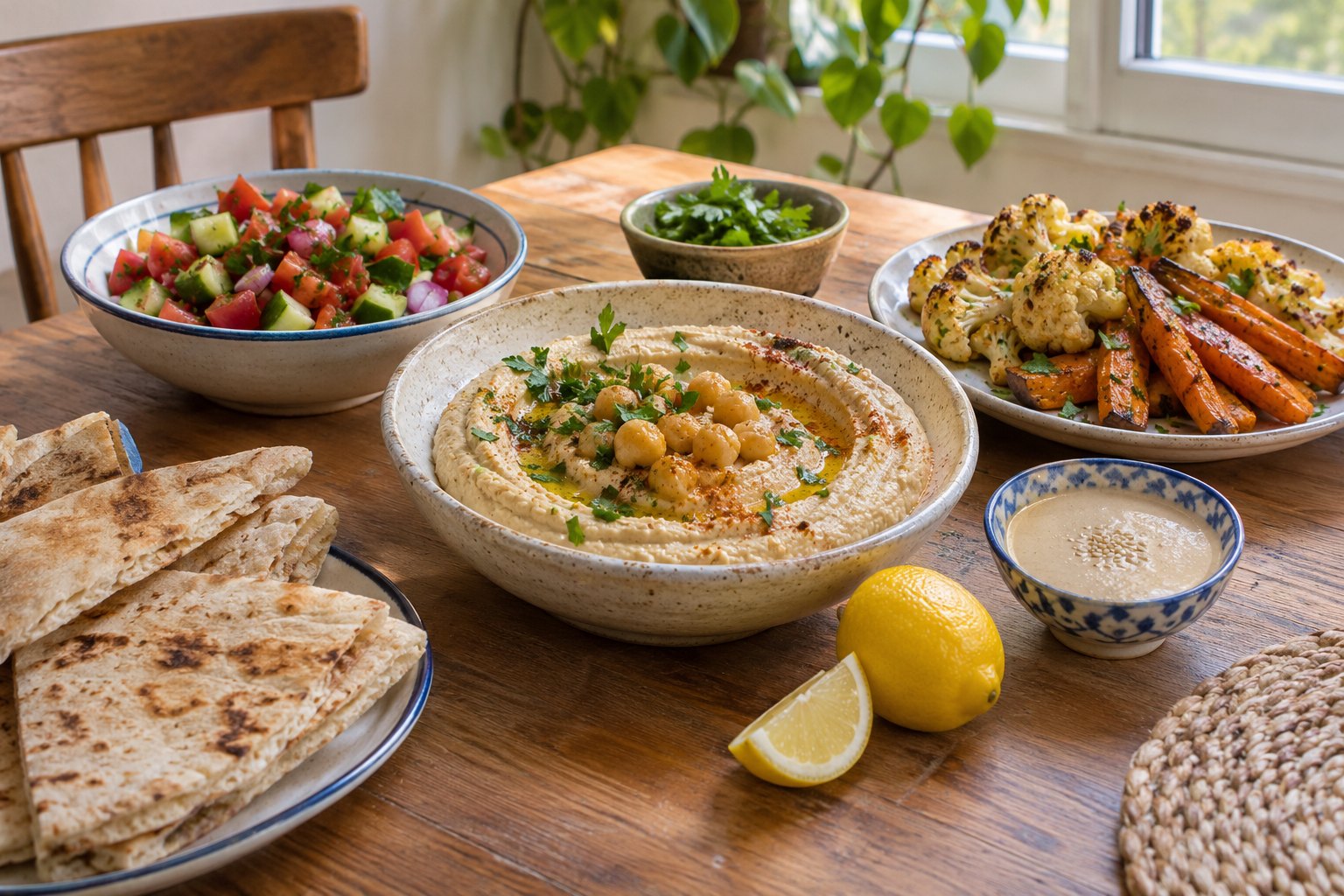
A spread of hummus, tahini, roasted vegetables, a lentil dish and suitable bread can provide inspiration. Its kosher status depends on the ingredients and preparation, rather than the menu description.
Restaurants and takeout: check both parts
An entirely vegan restaurant is not automatically kosher. The Chicago Rabbinical Council’s explanation discusses concerns including produce inspection, certain ingredients, cooking requirements and utensils. If kosher supervision matters to you or your guest, check the current certification and its scope before ordering.
Likewise, a kosher restaurant may serve animal products. Ask about the exact dish, sauces, toppings and preparation rather than assuming a dairy-free or pareve menu item is vegan.
Passover needs a separate check
Year-round kosher status does not automatically establish Passover suitability. OU-P and OK P refer to Passover; they are not abbreviations for pareve. OK also explains that Passover practices concerning kitniyot vary between communities. For a shared meal, ask which requirements your guests follow before choosing staples or substitutes.
Frequently asked questions
Is all kosher food vegan? No. Kosher food can include meat, dairy, fish and eggs. Vegan suitability needs its own check.
Does pareve mean dairy-free and vegan? Pareve is a kosher classification, not a vegan certification. Fish and eggs can be pareve.
Does every vegan ingredient need a kosher symbol? No. Some basic foods can be acceptable without one under published agency guidance. Processed products and particular ingredients require their own assessment.
Is an Israeli product automatically kosher? No. Country of origin is not a kosher certification. Check the exact product, just as you would with a US-made item.
More discoveries from Israel
Explore our Israeli vegan food innovations field guide or our shopping guide for visitors to Israel. These are discovery resources; inclusion in them does not establish a product’s kosher status.
About this guide: Prepared by Vegan Finds using the linked OU Kosher, OK Kosher and cRc resources, checked November 2, 2026. It is general shopping information, not a kosher ruling or a product endorsement. For a specific religious requirement, consult the relevant certifier or your rabbi. No affiliate links were added.